Mel had planned a proper Mother’s Day. A coffee somewhere nice, maybe a browse through the shops, the kind of outing Ann, her mum, genuinely loves.
But when Mel arrived, it was clear within minutes that it wasn’t going to be that kind of day. Ann needed a shower. She was unsettled. So, Mel helped her shower, got her calm, and eventually guided Ann out to the garden where they sat together with cake and a thermos of coffee Mel had brought from home.
“It was kind of not the Mother’s Day that you wish for,” Mel said. “But I guess I was lucky to be able to spend the time with her.”
Mel got her proper Mother’s Day a day later. (More on that in a moment.)
That ability to adapt, to let go of the plan and find something good in what’s actually there, is something adult children often have to learn when a parent develops dementia. The relationship doesn’t end. But it changes, sometimes in ways that are hard to name. And for a lot of people, navigating those changes while still feeling like a son or daughter (rather than a full-time carer) is one of the harder parts.
Michelle Harris, Brightwater’s Coordinator of Specialist Dementia Programs, has been working with families in this situation for years. She knows the feelings well.
It has a ripple effect, dementia,” she said. But she also knows that with the right support, families can find their way through, and often find moments they didn’t expect.
A different kind of grief
One of the first things Michelle does with families is give them language for what they’re going through. The term is “ambiguous loss”, a form of grief that’s different from losing someone suddenly, because the person is still there, but the connection keeps shifting.
“Today he’s still my husband,” she said, echoing what she hears from families. “But yesterday he wasn’t.”
For adult children, it can feel like they’re losing the parent they knew while still being responsible for the parent in front of them. The mum who used to make the decisions now needs them made for her. The dad they used to turn to is the one they’re now worrying about. It’s a kind of grief that often goes unacknowledged, because there’s no clear moment of loss, but rather a slow accumulation of small changes.
Naming it helps. So does knowing it’s normal.
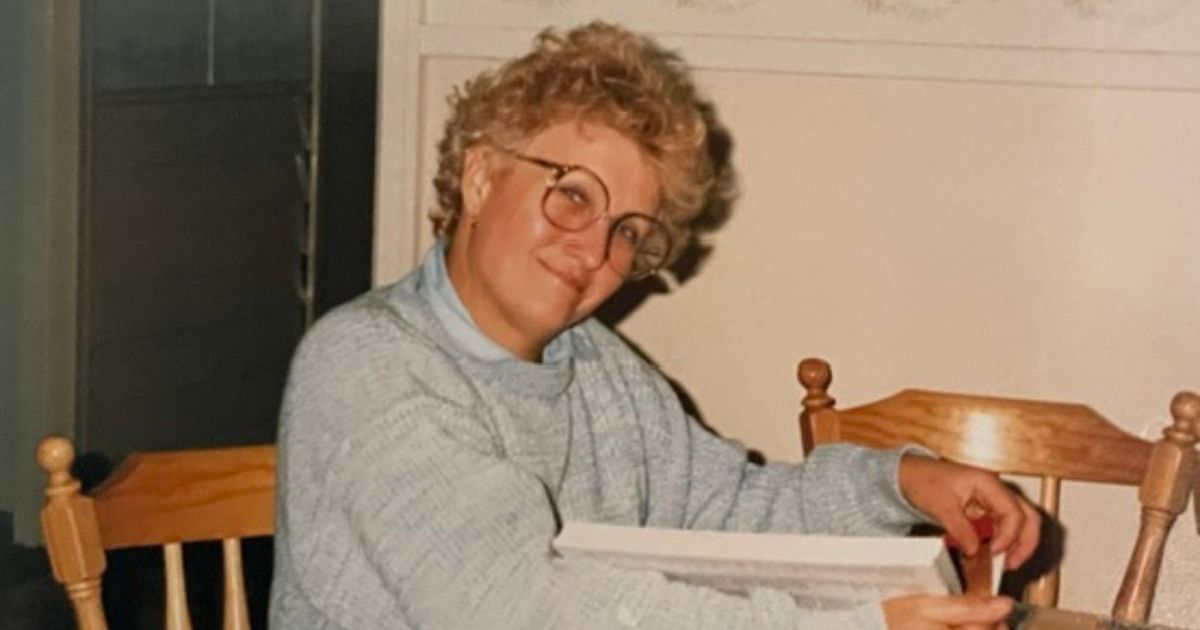
Mel has felt this. Ann was an incredibly capable woman. A hairdresser, a single mum for many years, a passionate woodworker and a talented painter. She lived independently in Tasmania for several years after her husband passed in 2017. But by 2024, it was clear Ann had dementia and it was no longer safe for her to be alone. Mel and her sisters made the big decision to move her mother to Perth so they could be closer together.
Mel said the first day Ann didn’t recognise her hit hard.
“I was expecting it,” Mel said. “I’d done a few seminars around dementia because I just felt I needed to be equipped as best I could. But that was a hard day.”
It wasn’t the end of the story.
Watch Mel share the moments that remind her mum is still there
The ups, the downs and the little flashes of Mum that never stop shining through.
The guilt and what to do with it
Guilt is almost universal among adult children who have a parent with dementia. Guilt about not noticing sooner. Guilt about not visiting enough. And for those in the sandwich generation, holding together care for a parent while raising children, often while also working, it can feel relentless.
Michelle said that sense of guilt usually comes from a place of love, but it needs to be managed rather than carried indefinitely.
She spoke recently with a young man, about to become a father, trying to work out how much time and effort he could realistically give his parent with dementia.
“It’s not his fault what’s happening to his parents,” she said. “His life is changing now. He’s about to become a father and he can’t be carrying on the way he was before, because he’s got different responsibilities.”
Setting honest limits isn’t abandonment. It’s how you sustain the relationship long-term.
Self-care is part of that. Not as an abstract concept, but practically: how are you sleeping? What’s your nutrition like? When did you last see your own GP?
“If you go down, you can’t care for your own family or yourself,” Michelle said.
Mel has learned this the hard way.
“Give yourself some grace,” she said. “It did take me a while to learn that. I felt guilty if I didn’t go and see mum on her bad days. I just felt the worst. But I’ve learned that there is only so much that you can do, and if you burn out, you’re no good to anybody.”
The goal, she’s come to understand, is just to keep showing up. Not perfectly, but consistently. And to be present when you do.
You're still their child, not just their carer
Here’s what can quietly get lost in the caring: the relationship itself.
It can happen without you realising, slowly, incrementally, until the role of son or daughter starts to feel like a job title. Michelle sees this a lot, and she’s clear about it. The goal isn’t to manage your parent’s care perfectly. It’s to stay in a relationship with them.
That looks different for everyone. For some, it’s keeping up a shared ritual, the Wednesday coffee that used to happen at a café can still happen.
“Think, ‘how can we get them into a wheelchair taxi’ or ‘how can we bring the coffee to him and sit on the veranda and do it?’” Michelle said.
Same meaning, adapted form. It also means bringing your own life into visits. Sharing news, asking their opinion on small things, showing them photos.
“Even if they can’t give you great answers, it’s about giving them an involvement, a sense of who they are,” she said.
And it means going in with something. Michelle calls this visiting with intention. Perhaps it’s a playlist of songs they love, a basket of foods to share, old photographs, a magazine about something they used to care about. She tells the story of a resident (a former lorry driver, who was closed off and angry) who lit up when she brought truck magazines and zero-alcohol Heineken on a visit.
“He was happy and I left the magazines and then when I go past his room now, he always smiles at me because it was meaningful for him,” she said.
These moments don’t need to be elaborate. It just needs to be for them.
Mel has found her way back to Ann through the things Ann has always loved. She’s tactile, always has been, during a lifetime of sewing and making and creating, so Mel takes her shopping, wheeling her slowly through the clothes racks and letting her run her hands across the fabrics. It’s not really about the clothes. It’s about the texture, the colour, the shared memory of what those things meant to them both.
Which brings us back to that Mother’s Day.
Your loved one is still there
The day after the quiet garden visit with the thermos of coffee, Mel took Ann out properly. They went to a shopping centre. Ann sat in the wheelchair while Mel pushed her through the racks, stopping when something caught her eye. At some point they ran into a woman with a guide dog. Mel asked if Ann could say hello, and they stopped. It was a few minutes, that’s all. But it was enough.
“The story got bigger and bigger,” Mel said, laughing. “The dog climbed up on her lap and licked her face and did all these wonderful things, which it didn’t actually do, but in mum’s mind that’s how she’d engaged with this dog. So that was wonderful.”
They bumped into the same woman again later. That time the dog actually did put its paws up on Ann’s lap, much to her delight.
Mel also took Ann for lunch. They were both exhausted by the time they got home. It was a good day, the kind Mel says she hadn’t had with her mum for a while.
This is what Michelle means when she says never underestimate what’s still present.
“People say to me, ‘Oh, she’s not there. He’s not there anymore’. Well, I disagree. It’s just that we’ve got to find a way to connect. It’s us that’s the problem. We need the coaching.”
As dementia progresses, the senses become the bridge.
“If vision fails, use hearing. If hearing fails, use taste. Find a sense that’s working,” Michelle said.
Then the connection, when you find it, is real.
“People live in the moment as dementia advances,” Michelle said. “They don’t remember what you said or did, but they remember how you made them feel in that moment.”
On that same outing, three hours in, Ann turned to Mel and said: “Melanie Jane, would you be known as Melanie Jane?”
“I said, ‘Yeah, that’s right, mum.’ And she was really pleased with herself. And I thought, wow, she’s actually worked it out. It’s still there somewhere.”
It is. The relationship, the recognition, the warmth between them, none of it disappears with a diagnosis. What changes is how you reach it. And the reaching, when it works, is worth everything.
“Just be kind to them,” Mel said. “And kind to yourself.”
Brightwater’s dementia specialists can help with practical strategies, family coaching and connecting you to the right support. Call us on 1300 223 968 to find out more.