
You visited yesterday and it went well. You sat together, talked a little, shared a cup of tea. There was a moment where your mum looked at you and smiled, and it felt like everything was okay.
Today, nothing lands. She won’t make eye contact. She’s not settled. You try the same things that worked 24 hours ago and they fall flat. You leave feeling like you’ve failed. Or, worse, like you’re losing her all over again.
If this sounds familiar, you’re not alone. And you’re not doing it wrong.
Why some days are harder than others
Dementia is often described in terms of what’s happening in the brain: the pathology, the diagnosis, the clinical progression. But Brightwater Dementia Support Specialist Naomi Moylan sees it differently.
“I like to think about dementia as a shift in the way people experience the world,” Naomi said. “We can have all the quotes about what dementia is but, ultimately, as a human being, it’s a change in the way they experience the world.”
That shift isn’t the same every day. Just like any of us, a person living with dementia can be tired, in pain, frustrated, or simply not in the mood. The difference is they may not be able to tell you that. They might not have the words, or even the awareness of what’s wrong.
“We’re all human beings and we all have different days, good days and bad days,” Naomi said. “So, it shouldn’t be any different for a person living with dementia.”
There’s also what’s happening around them. A noisy environment, an unfamiliar face, a routine that’s been disrupted: any of these can make a hard day harder. And on the other side, care partners are carrying their own stress and tiredness. Some days you’re just not picking up on things the way you did the day before.
It can happen so gradually you don’t notice it at first. The conversation that used to flow easily now takes more effort. The activities you shared start to fall away. And without the right support or knowledge, it can feel like finding your way in the dark.
The pressure of getting it right
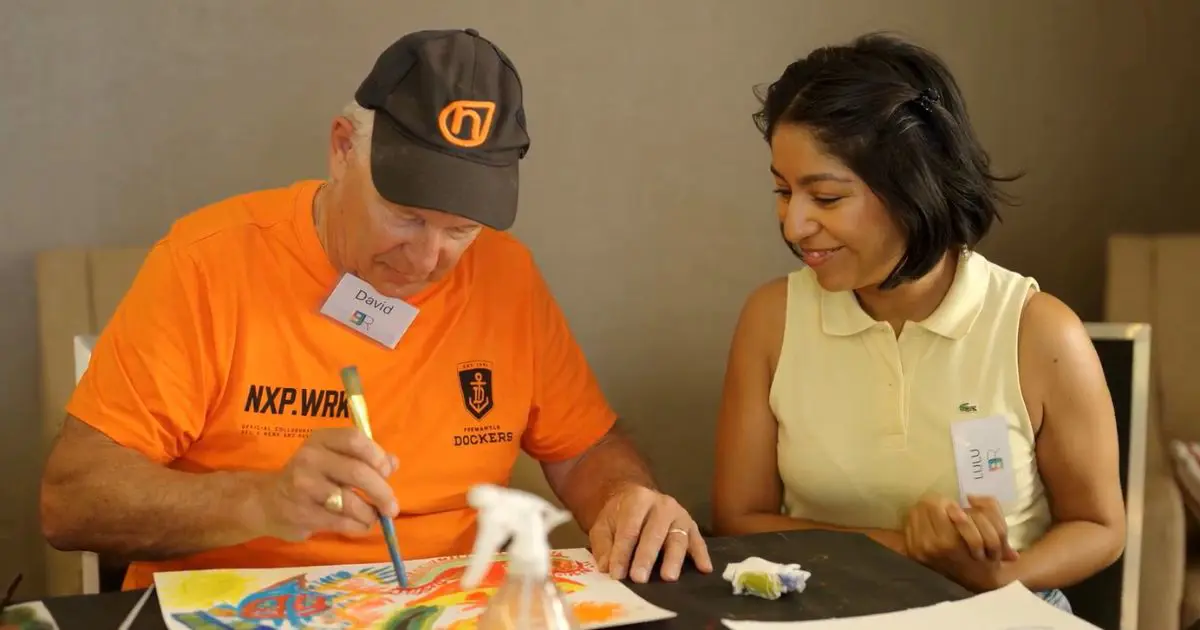
One of the things Naomi hears most often from families is the feeling that they’re failing. That if they just tried harder, things would work. But that pressure to get every interaction right, to tick every box, can actually make things worse.
“The amount of times I hear people go, ‘But they just won’t have a shower and they haven’t had a shower today’,” Naomi said. “They’re thinking that the most important thing is that they get their partner to have a shower that day. But, it’s okay. They don’t have to have a shower today and the battle is not worth it.”
Trying to reason with someone whose reality looks different to yours doesn’t work. They may not understand why something matters. Pushing harder only creates friction for both of you.
“There is no point trying to argue or reason, because in their reality they’ve had a shower or they don’t need to have a shower,” Naomi said.
What works better is gentleness. Going with the flow. Naomi describes walking together to the bathroom to freshen up before an outing, talking about feelings, about how lovely it’ll be to get outside and feel the breeze.
“Maybe starting to wash your own face and then pass them the cloth,” she said. “It’s not a trick. It’s meeting them where they are.”
Hear from Fiona, Naomi and Michelle
If you have ever wondered whether you are saying the right thing, doing enough, or somehow getting it wrong, this conversation is for you.
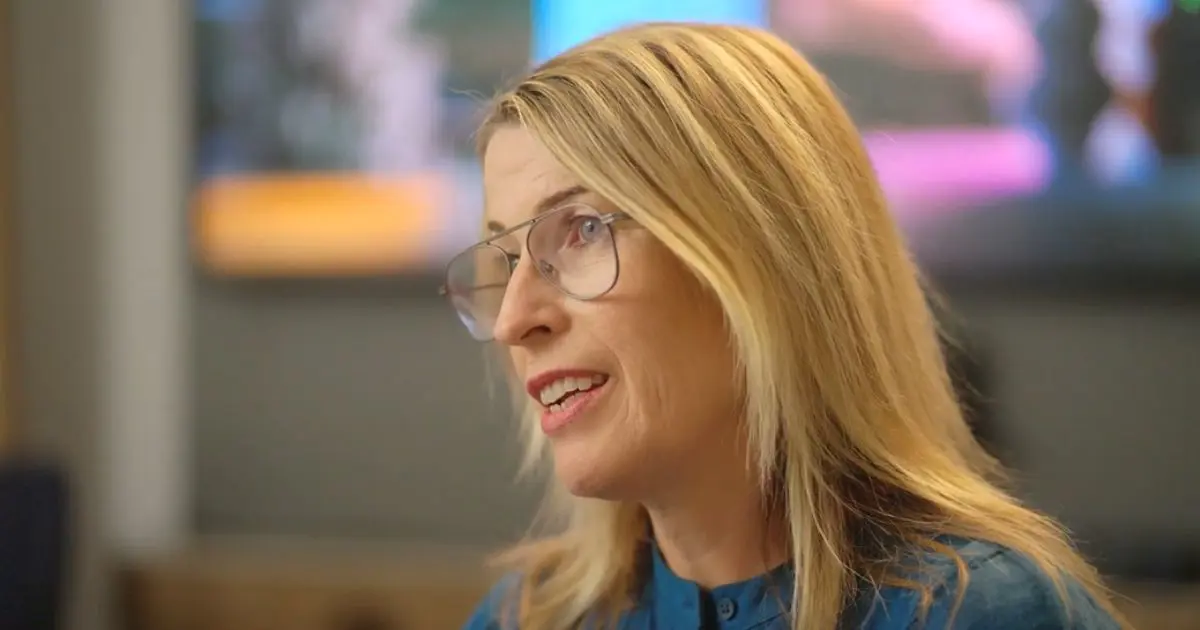
Fiona Simpson from Dementia Australia joins Brightwater dementia specialists Naomi Moylan and Michelle Harris to share what they have learned about supporting people living with dementia and the families around them.
Watch the video below.
What connection actually looks like
Here’s the thing that’s easy to forget: connection doesn’t require a perfect conversation. It doesn’t even require words.
Naomi talks about the domains of wellbeing that all of us need as human beings: identity, connectedness, security, autonomy, meaning, growth and joy. Those needs don’t disappear with a dementia diagnosis. If anything, they become more important, and harder for others to recognise.
“At the end of the day it’s about that person’s wellbeing,” Naomi said. “It’s not about thinking we’ve had the perfect meal, we’ve had the perfect amount of activity. It’s about entering into their world and knowing that they’re happy and connecting in that moment.”
Sometimes connection is sitting together and listening to a piece of music that meant something to them. Sometimes it’s looking at old photos (not quizzing them on who’s in the picture, but talking about how that day felt). It’s about feelings, not facts.
Sometimes it’s even simpler than that. A smile. Eye contact. Holding a hand. Toe-tapping along to a song.
“I really hate the phrases, ‘the long goodbye’ or ‘the fading away’,” Naomi said. “Because they’re really still who they are as humans until they leave this world. It’s just harder to communicate in the same way.”
Small, practical shifts that help
Much of what Naomi describes comes down to understanding what a person can still do, and setting things up so they can do it.
She tells the story of a wife who was frustrated that her husband wouldn’t sweep the back patio when she asked. He’d just follow her around the house instead. Naomi’s advice was simple: walk outside with him, put the broom in his hand, and start the sweeping motion. He couldn’t process the multi-step instruction from across the house, but once the broom was in his hands and the action had started, he understood.
“It’s about understanding what they understand,” Naomi said. “And often it’s just that light bulb moment and they’re like, ‘Oh, so they can still do things’.”
The environment matters, too. A red cup on a white table with nothing else around it is much easier to find than a cup lost among 50 things. Simplifying the space isn’t about stripping away personality; it’s about making the world easier to navigate.
And when things aren’t working at all, it’s okay to stop. Take a breath. Go outside for a moment if you can. Let someone else step in for a while.
“You can’t care for someone else if you haven’t looked after yourself first,” Naomi said.
You don’t have to do this alone
One thing Naomi feels strongly about is that support should begin much earlier than it usually does.
“From the point of diagnosis people are often just sent home to get their affairs in order and they’re not supported well,” she said. “It’s like finding your way in the dark.”
She compares it to a cancer diagnosis: terrible news, but you know what the plan is, and people wrap around you. With dementia, that often doesn’t happen. But there is support out there, and it can make a real difference. For example:
- Speech Pathologists can help with communication strategies
- Occupational Therapists can help set up environments and find ways to keep people engaged in what’s meaningful to them
- Physiotherapists can help maintain physical health and mobility.
Organisations like Dementia Australia offer counselling, education and peer support. Carers WA can help too. Assistance is also available through our Support at Home program.
“Just like it takes a village to raise a child, it really takes a village to support someone living with dementia,” Naomi said.
A reminder, if you need one
Many times over the years Naomi has said to a care partner, “You are doing amazingly, the love that you show, the care that you’re providing”. She said the response was always the same.
“They go, ‘Oh, no-one’s ever said that to me before’.”
So, if you’re reading this and wondering whether you’re getting it right, you probably are, and more than you realise. Don’t beat yourself up if today was a hard day. Don’t measure your love by whether the conversation flowed or the shower happened.
The person you care about is still in there. Connection still exists. It just looks different now, and that’s okay.
Call Brightwater on 1300 223 968 to learn more about our dementia support services.


