When you have a partner with dementia, the relationship you share doesn’t suddenly end. But it does change. Roles shift, routines start to look different, and sometimes grief shows up long before anything has actually been lost.
And yet, through all of that, the connection between two partners can still be one of the few things that feels familiar and steady.
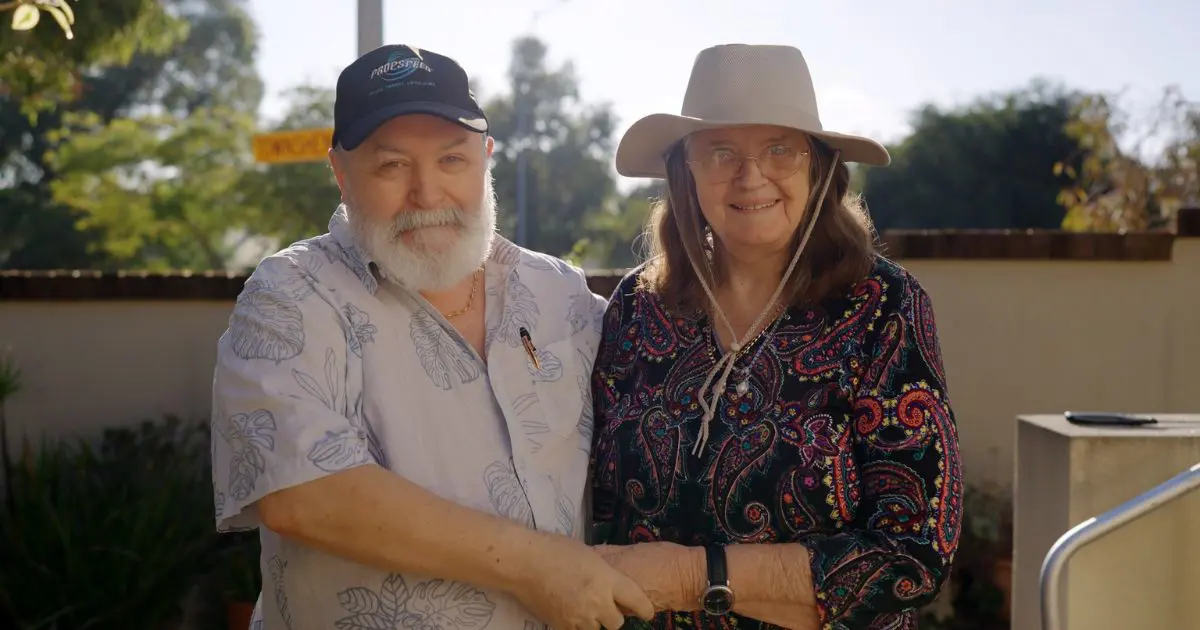
This article explores how couples navigate dementia together, with insights from Brightwater’s Coordinator of Specialist Dementia Programs, Michelle Harris, and Mark, whose wife, Dot, has been living with Alzheimer’s dementia for several years.
You’re still a partner, not just a carer
One of the biggest challenges people face when a partner is diagnosed with dementia is the gradual pull towards becoming a full-time carer, often at the expense of the relationship itself. It can happen slowly — so slowly you don’t always notice it at first. You start managing medications, prompting meals, keeping an eye on safety, and before long, the partnership can begin to feel more like a care arrangement.
Michelle says protecting the relationship is vital.
“If that relationship is treasured and supported… even through something as simple as holding hands or a cuddle… it can make such a difference to someone’s self-confidence and sense of self-worth,” she said.
For her, staying in the role of partner — rather than slipping fully into nurse or spouse carer — is a conscious choice, even if it doesn’t always feel like one.
“Often, through no fault of their own, people move into that caretaker mode,” she said. “It’s protection, really, more than anything. When you love someone, you want to protect them.”
For Mark, the dynamic with Dot hasn’t disappeared, but it has changed shape.
“You wear two hats; you wear a student hat and a teacher’s hat,” the former teacher said. He helps Dot with things she finds difficult, but she teaches him things, too, in the way she responds and how she experiences the world now. That back and forth helps their relationship still feel like a partnership, rather than one person simply managing the other.
The emotional reality
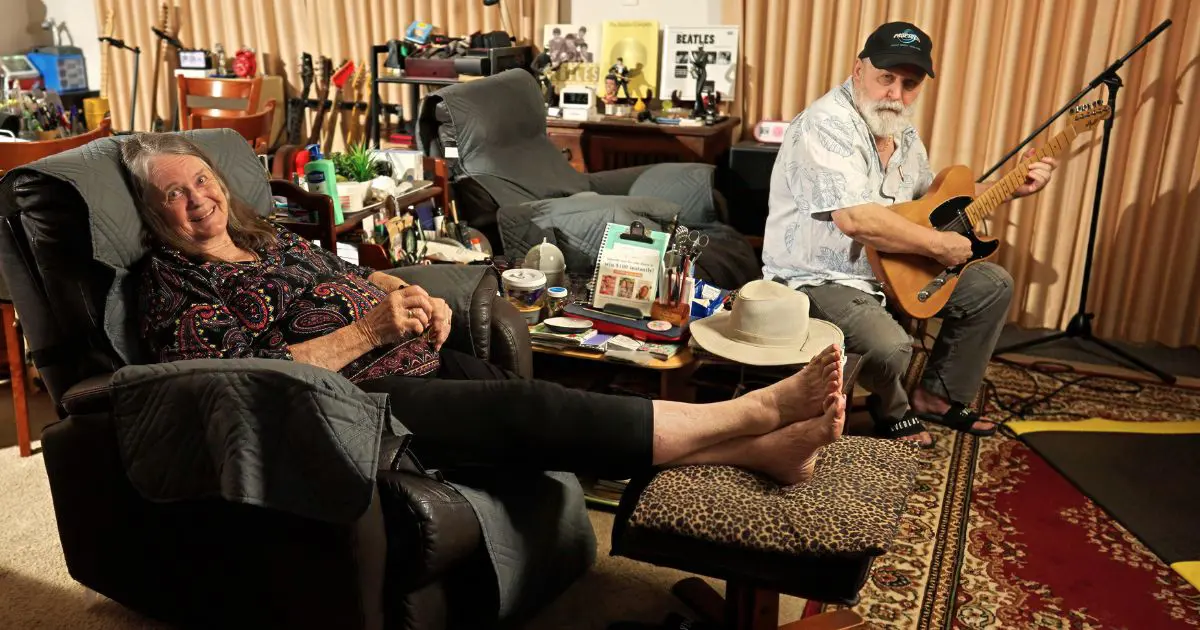
There isn’t one neat emotional experience when your partner has dementia. It can be grief, frustration, loneliness — and still love — all at once. Most people go through that, even if it’s not something that gets talked about much.
Many partners find themselves grieving the future they had imagined, while still being fully present for the person in front of them.
Michelle has also seen how relationships around you can change.
“Friends and even close family aren’t always able to understand why this person has changed, and sometimes they pull back,” she said. “The ones who lean in — who want to support you — they’re the ones to hold onto.”
She also spoke about something many people struggle with: asking for help.
“Having the courage to ask is so important,” she said. “And you shouldn’t feel guilty about seeking support, even on your own at first.”
Mark tends to ground things in practicality and humour. When Dot uses unexpected words (like asking for “rabbits” when she means carrots), he’s learned to approach it with curiosity rather than frustration.
“If you want to make this work, being a husband and a carer, you’ve got to be a bit of a detective,” he said. “Work out what they really mean, and keep things as simple as you can.”
Preserving what matters
Keeping your shared routines and rituals going often takes a bit of adjustment. The activity itself might change, but the meaning behind it doesn’t have to.
If you always cooked together, you might still cook — just in a simpler way. If music was your thing, maybe that becomes a shared playlist. If you used to go out for coffee, that can still happen, just with a bit more planning.
Michelle encourages couples to focus on what still works, rather than what’s been lost. In many cases, an Occupational Therapist can help identify which senses and abilities are strongest and build activities around those.
“Your Occupational Therapist will work out what senses are still working and what’s not, and help shape a program around that,” she said.
Mark has taken a practical approach at home. He and Dot have simplified their routines, like clearing things away before bed, so mornings feel easier. He also takes full responsibility for managing medication — one area where, as he sees it, safety has to come first.
Staying connected as dementia progresses
As dementia progresses, communication does change, but connection doesn’t have to disappear with it.
Michelle often encourages couples to lean into sensory experiences: touch, taste, smell, sound and sight. These can become powerful ways of staying connected, even when words are harder to find.
That might look like a hand massage, listening to music together through earbuds, sharing favourite foods, or using photographs to bring back familiar memories.
“It’s about reminiscing through the senses,” she said. “If someone loves Neil Sedaka, play Neil Sedaka. You might sit together, each with an earbud in, just listening.”
“Just because someone doesn’t speak, it doesn’t mean they’re not thinking,” she said. “Silence isn’t the absence of communication.”
That’s why she encourages partners to keep including their loved one (in greetings, in conversations, in small decisions) even if there isn’t always a response.
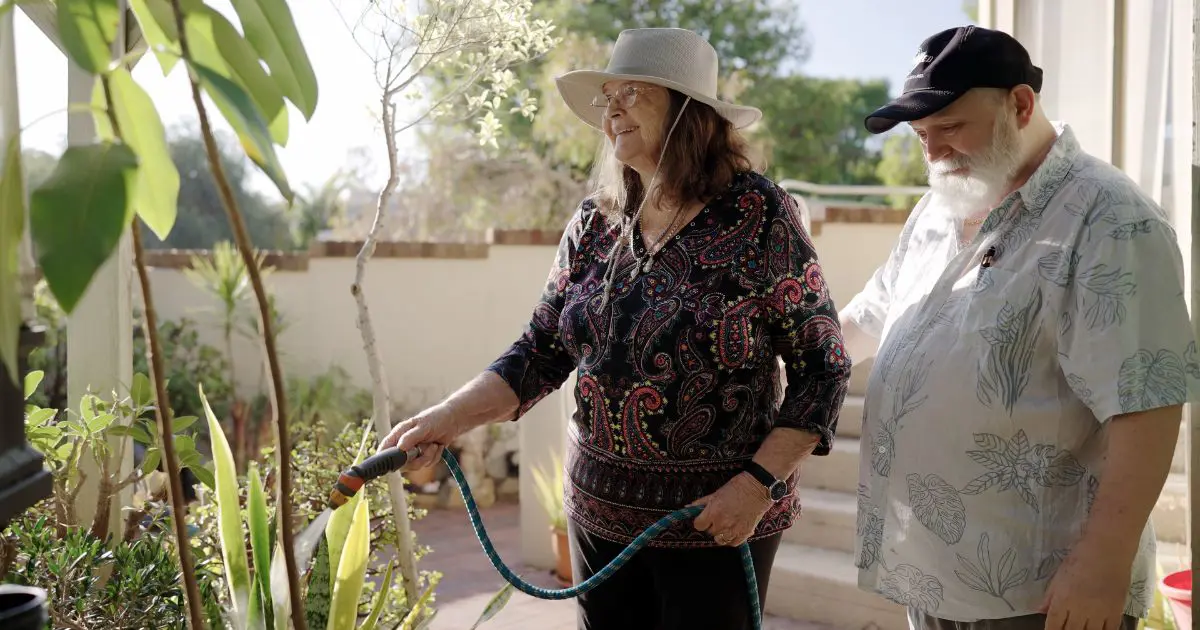
For Mark, staying connected often comes down to doing things together. He and Dot still cook, garden and play games. He’s also found that a bit of spontaneity helps.
“I don’t tell her what we’re doing until the day,” he said. “Then I’ll say, ‘We’re going to do this; we’re going to do that.’ And she’ll say, ‘Oh, I didn’t expect that.’ And she’ll have a really good time.”
He’s also learned the importance of patience and encouragement.
“If they do something right, you tell them ‘you did a really good job’,” he said. “They need that bit of extra encouragement.”
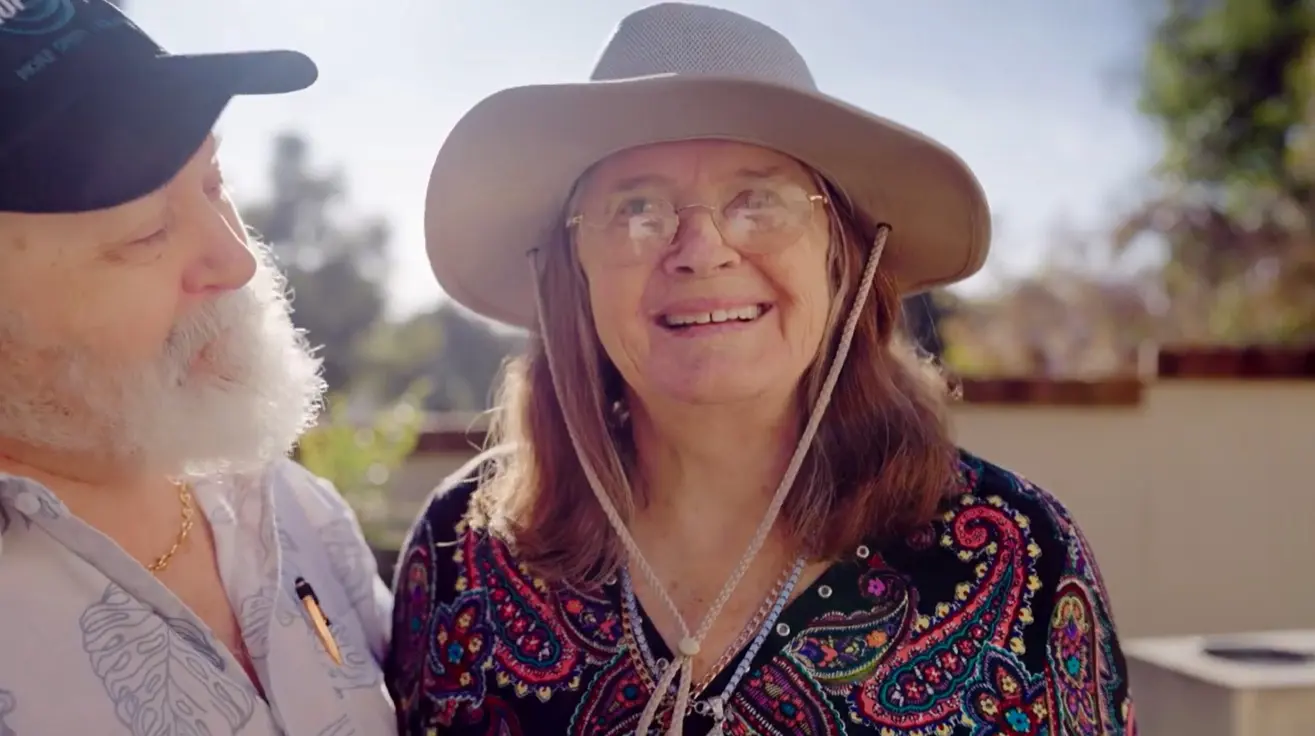
Watch Mark & Dot's story
From a chance meeting at a live music gig to a lifetime of adventures together, Mark and Dot share how they're continuing to navigate life as a team.
When you need more support
Recognising when it’s time for more support isn’t a failure, it’s often a turning point.
Michelle points to a few signs that extra help might be needed, including unplanned weight loss, continence issues, frequent falls or disrupted sleep. When those things start to appear, professional support can make a real difference.
Her advice is to reach out earlier than you think you need to.
Often, that support starts at home. Through programs like the Australian Government’s Support at Home program, where older people can access help to stay living independently in their own home.
This might include support with everyday tasks like cleaning, laundry or gardening, clinical care such as speech therapy or other allied health services, or even respite care. It can take some of the day-to-day off your plate and keep things manageable, so you can focus on each other.
“The people who do best are the ones who’ve held onto their relationship,” she said. “They haven’t let go of that sense of ‘this is still my person’. There’s still love, humour... that connection is still there.”
You’re not in this alone
Whether you’re supporting a partner with young-onset dementia or navigating changes later in life, what you’re feeling is valid. The grief, the frustration, the love that sits alongside them, they’re all part of it.
And you don’t have to do it on your own.
As Mark puts it: “Don’t be afraid to ask for advice. It doesn’t have to be from experts; it can just be people who’ve been through something similar, or someone who understands.”
Your partner is still your partner. Dementia changes many things, but it doesn’t have to change that.
Learn about Brightwater at Home or speak with someone from our team about support for you and your partner.
Get in touch