

Aged care isn’t provided by one or two key people, it’s a whole team working together to make sure residents and clients get the care and support they need, every day. Some of these people you’ll see often, others are more behind the scenes, but they all play an important part in keeping things safe, comfortable and running smoothly.
So, who is actually in these teams? What do they do, and why does it matter?
In this series, we’ll introduce you to the different roles in aged care, explain what they’re responsible for, and show how they all work together to support you and your loved ones.
What is a physiotherapist?
Think of a physiotherapist as part movement coach, part problem solver and part cheerleader.
Their role is to help you stay active, safe and independent in your own home for as long as possible. For one person, that might be walking to the local shops. For another, it could be getting out of a chair more easily, keeping up with the grandchildren or feeling confident enough to leave the house again. Our Brightwater at Home physiotherapists work alongside clients to achieve the goals that are meaningful for them.
A physiotherapist may help with:
-
Improving strength and balance
-
Reducing the risk of falls
-
Managing aches and pains
-
Assessing walking aids
-
Improving mobility and confidence
-
Creating tailored exercise programs
-
Supporting recovery after illness, injury or hospital stay
-
Maintaining independence at home
-
Improving brain health through exercise
Most importantly, they work with you to keep you doing the things you enjoy.
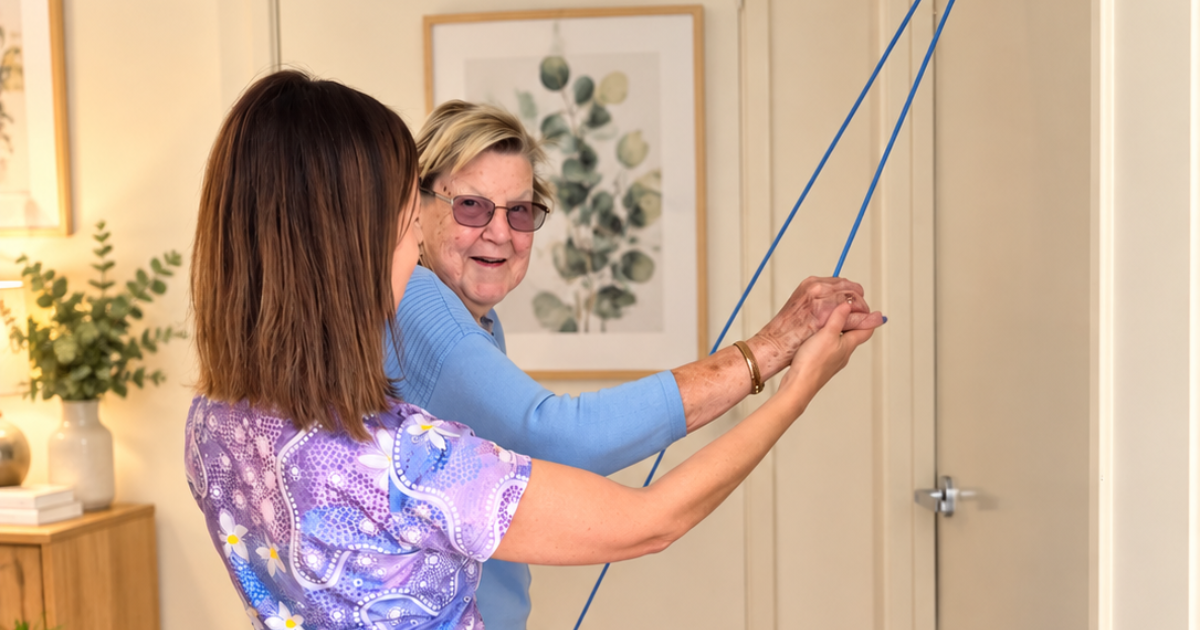
Why is a physiotherapist important?
A physiotherapist helps you stay active, safe, and independent at home for longer. They work with you to improve strength, balance, and confidence with everyday activities, while helping to reduce the risk of falls and manage pain.
They can also assess physical ambitions and develop an exercise program that suits your needs and goals. Most importantly, they help you keep doing the things you enjoy and work with you to maintain your quality of life.
What does a typical day look like for a physiotherapist?
No two days are the same.
A typical day may involve visiting clients in their homes, talking about how things have been going and working together in partnership towards goals that are meaningful to them.
It might also involve assessing mobility, reviewing walking aids, or practicing exercises together. And yes, sometimes that means spending part of the day watching people walk!
A typical day might include:
-
Meeting clients where they live
-
Understanding goals and what's important to them
-
Watching people walk (yes, that's a real part of my job!)
-
Practicing exercises together
-
Helping clients get in and out of chairs, beds, or cars more safely
-
Working with families and carers
-
Having the occasional cup of tea and a good laugh along the way
The best part about physiotherapy in the community is helping people in the place they feel most comfortable – their own home.
When are clients and families likely to see or hear from a physiotherapist?
Clients and families often contact a physiotherapist when everyday activities are becoming more difficult. Physiotherapy can help people stay active, independent and confident, but it is best to address concerns early before they start having a bigger impact on daily life.
This could be when:
-
Someone has had a fall or a near miss
-
Walking has become more difficult
-
Pain is getting in the way of daily activities
-
A hospital stay has left someone feeling weaker
-
A walking aid or equipment might be needed
-
A client wants to stay active and independent
Sometimes it is family members who reach out first. They may have noticed changes in how their loved one is moving, even when mum or dad feels they are managing well. This might include being more cautious, less confident, or avoiding activities they once enjoyed. Physiotherapists work closely with clients and their families to understand what is changing and identify practical strategies that support safety, mobility and independence.