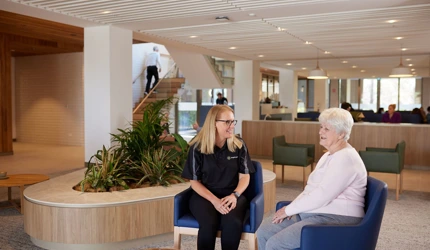

Aged care isn’t provided by one or two key people, it’s a whole team working together to make sure residents and clients get the care and support they need, every day. Some of these people you’ll see often, others are more behind the scenes, but they all play an important part in keeping things safe, comfortable and running smoothly.
So, who’s actually in these teams? What do they do, and why does it matter?
In this series, we’ll introduce you to the different roles in aged care, explain what they’re responsible for, and show how they all work together to support you and your loved ones.
What is a care worker?
A care worker within a home care setting provides non-clinical, in-home support to help clients live safely, comfortably and confidently in their own homes.
They support clients with:
- Personal care, including showering, dressing, grooming, toileting and hygiene.
- Mobility support, such as helping with transfers and using aids like walkers.
- Daily living tasks, including meal preparation, hydration support, light cleaning, laundry and home tidying.
- Shopping and errands, such as collecting groceries or prescriptions.
- Community and social support, helping clients attend appointments, activities and stay connected.
- Companionship and emotional support during regular visits.
- Health and safety monitoring, noticing changes in wellbeing and reporting concerns.
- Medication reminders to help you stay on track with your prescribed routine.
- Following care plans, delivering support in line with an agreed, personalised care plan.
Care workers are often the people clients see most regularly, offering practical help, companionship and reassurance.
Why is a care worker important?
A care worker is important because they support clients with the everyday tasks and routines that allow them to live safely, comfortably and independently at home.
They:
- Support personal care and daily routines so clients can maintain dignity
- Help keep the home environment safe, clean and comfortable
- Assist clients to attend appointments, run errands and stay connected with their community
- Provide companionship and emotional support during regular visits
- Act as an extra pair of eyes and ears, noticing changes in wellbeing and raising concerns so support can be adjusted early
- Deliver care in line with agreed care plans to ensure support is consistent and reliable
A job well done means clients feel listened to and supported, while families feel confident their loved one is in caring, capable hands.
When are clients and families likely to see or hear from a care worker?
Clients and families usually see a care worker during scheduled visits, which may be in the mornings, afternoons or on weekends, depending on the care plan. Home care support is flexible and delivered through rostered shifts.
You’re also likely to see or hear from a care worker:
- When accompanying clients to outings or appointments
- When support needs increase, such as after a hospital stay
- If there are changes in wellbeing that need to be shared with the wider care team
Through regular visits, care workers build trusting relationships and become a familiar, steady presence in the home that clients and families can rely on.
Looking for support at home?
Occupational therapists are just one part of the Brightwater at Home team. Discover the range of services we offer to help you stay independent and live well at home.
Explore Support at Home