
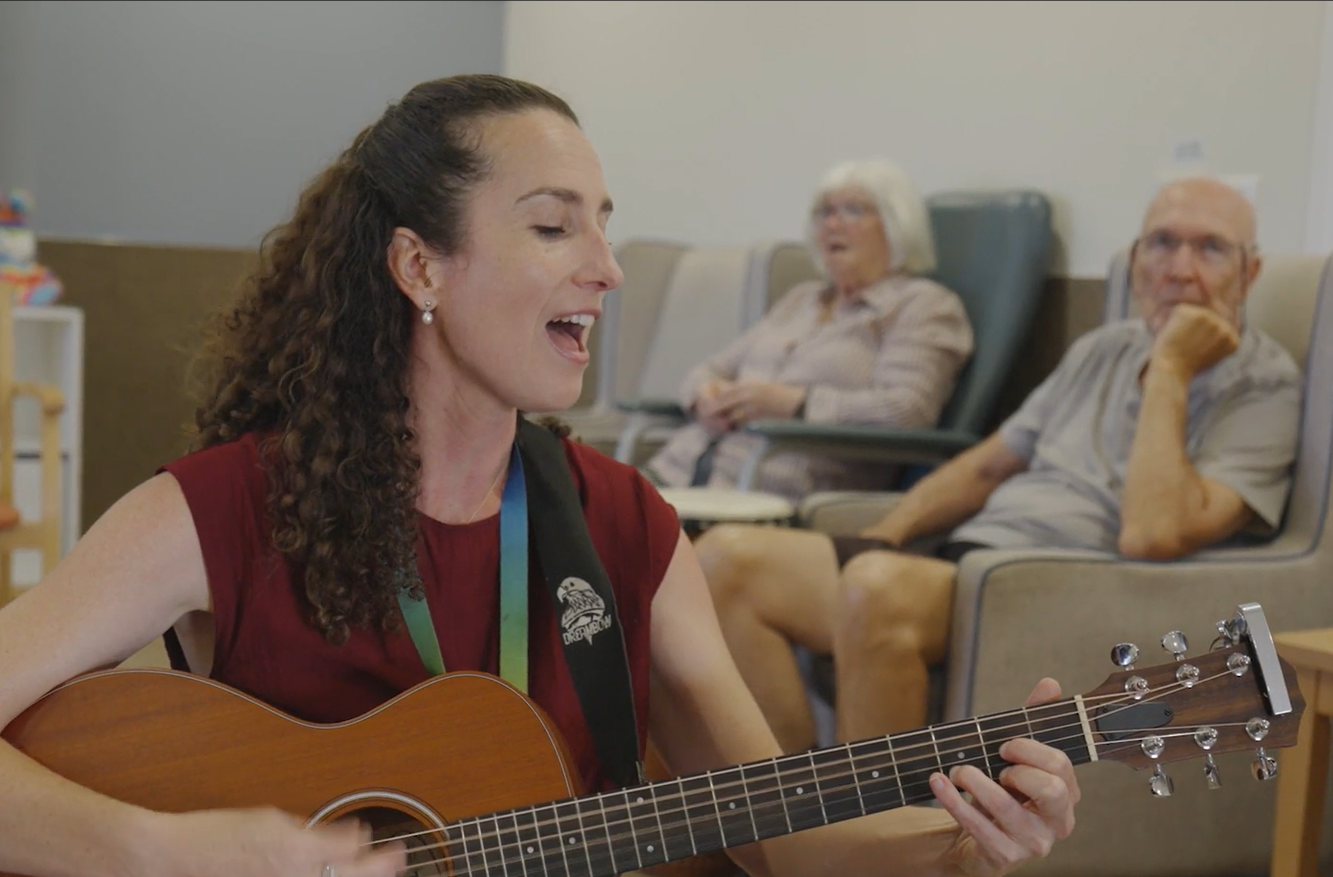
When Marie walks into a room, she brings more than an instrument. As a music therapist at Brightwater, her role is to use music intentionally and purposefully as a tool to support clients’ health and wellbeing.
"Music therapy is a research-based allied health profession in which music is used to actively support people through improving their physical and mental health, functioning and well-being," she explains.
In practice, that can look different for everyone. For some clients, it means learning a new instrument for the first time. For others, it's rediscovering a song from their past, or simply finding a moment of calm.
The science behind music therapy is compelling. When people engage with music, the brain releases chemicals such as oxytocin which lift mood and ease anxiety - a finding supported by Trends in Cognitive Sciences. Studies also show that it can reduce depression and help improve social communication. The positive effects are not only felt by clients, but also by their families and carers.
For people living with dementia, the impact can be especially significant. Memories linked to music often remain intact until the later stages of the disease, allowing music to connect with people when other forms of communication become difficult. Research shows that regular music therapy can improve language and communication and reduce anxiety, depression and apathy
"Research confirms that people with dementia can learn new songs, they can recall lyrics and even learn how to play a new instrument," says Marie. "Engaging in these activities can enhance a person's feeling of achievement and confidence."
For many clients, music therapy offers something that can be hard to find elsewhere — a chance to feel capable, creative and connected, regardless of where they are in their health journey.
Music therapy also brings people together. Sessions are offered to clients across Brightwater Residential Aged Care (RAC) sites and often draw in people who weren’t expecting to take part, creating spontaneous moments of connection that extend well beyond the therapy room.
For families, understanding what music therapy involves can shift the way they think about a loved one's care. It's an evidence-based practice delivered by qualified registered music therapist, designed to meet each person where they are.
Discover how music therapy can support your loved one
Curious how music therapy can make a difference? Speak with our allied health team today on 1300 223 968 to learn how we can support your loved one.
Contact us