
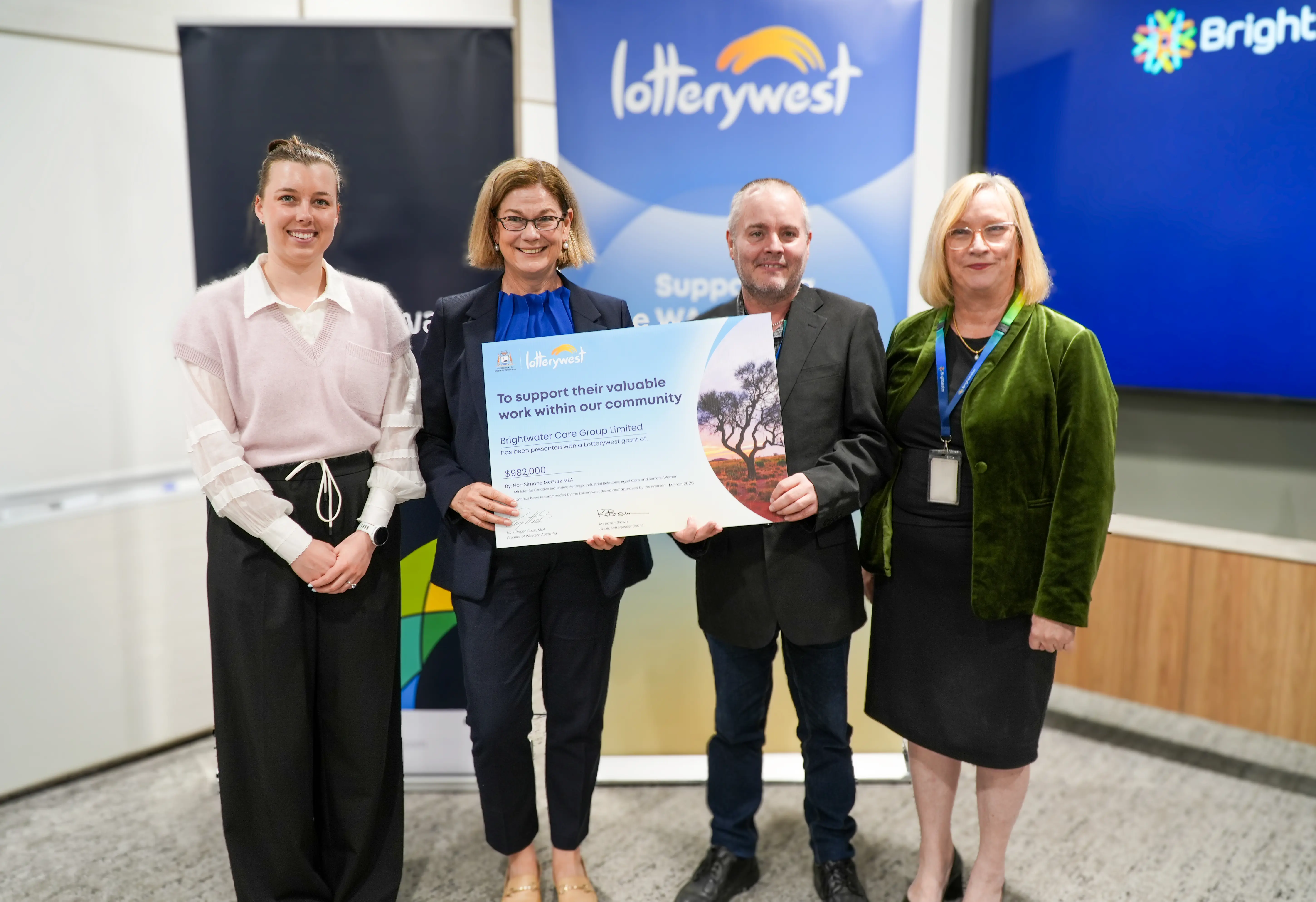
Leading aged care and disability support provider Brightwater Care Group has received a Lotterywest grant of $982,000 for two industry-leading projects aimed at improving wellbeing for people living with dementia.
The grant will be used to create Western Australia’s first purpose-built Young Onset Dementia (YOD) home in Perth, set to become a replicable blueprint for future developments.
Funding will also enable Brightwater to trial Abi Humanoid Companion Robots across four aged care homes and the new YOD home to create social connection for residents.
Brightwater CEO Dr Catherine Stoddart said the Lotterywest grant would go a long way to providing greater, more empathetic care for young West Australians living with dementia.
“Young Onset Dementia affects almost 3,000 people aged in Western Australia, and this number is expected to rise nearly 50% by 2054,” Dr Stoddart said.
“We have found a gap in both purpose-built residential options for this group and system support for people in their 30s to early 60s diagnosed with YOD.
“This often leads to many people living with YOD to lose work, parenting roles and social connection, resulting in social isolation which has now been recognised as a public health crisis.
“These two interconnected and industry-leading projects will help address critical gaps in dementia care in Western Australia, and we thank Lotterywest and the WA State Government for their assistance in turning these initiatives into reality.”
The purpose-built YOD home, located in Waikiki, has been co-designed with families and people sharing their lived experience to create a safe and age-appropriate environment.
Once built, the house will be tested and evaluated to make sure it maximises autonomy, dignity and wellbeing for residents, before being potentially replicated across WA and beyond.
“Brightwater has already taken pioneering steps in providing residential support for people living with YOD through two retrofitted homes in Kingsley,” Dr Stoddart explained.
“These self-funded projects opened in 2024 and 2025, but they were adapted homes rather than purpose-built, which is where we see the Waikiki home as a gamechanger.”
Dr Stoddart said the introduction of Abi Humanoid Companion Robots would also transform how West Australians living with dementia experience connection and emotional wellbeing in care.
“There is urgent need for innovative and ethical solutions to help drive engagement and reduce isolation in dementia care environments,” she said.
“Importantly, these companions will not replace the compassionate work of our carers. They will complement, support and uplift our staff, enhancing morale and freeing up time for more meaningful human connection.
“We also see opportunity to generate WA-based research and evidence on ethical and technology-enabled care through the work of these robots, laying the foundations for broader community use in the future.
“Both of these initiatives will help Brightwater build a smarter, more connected, and compassionate aged care system for Western Australia.”