
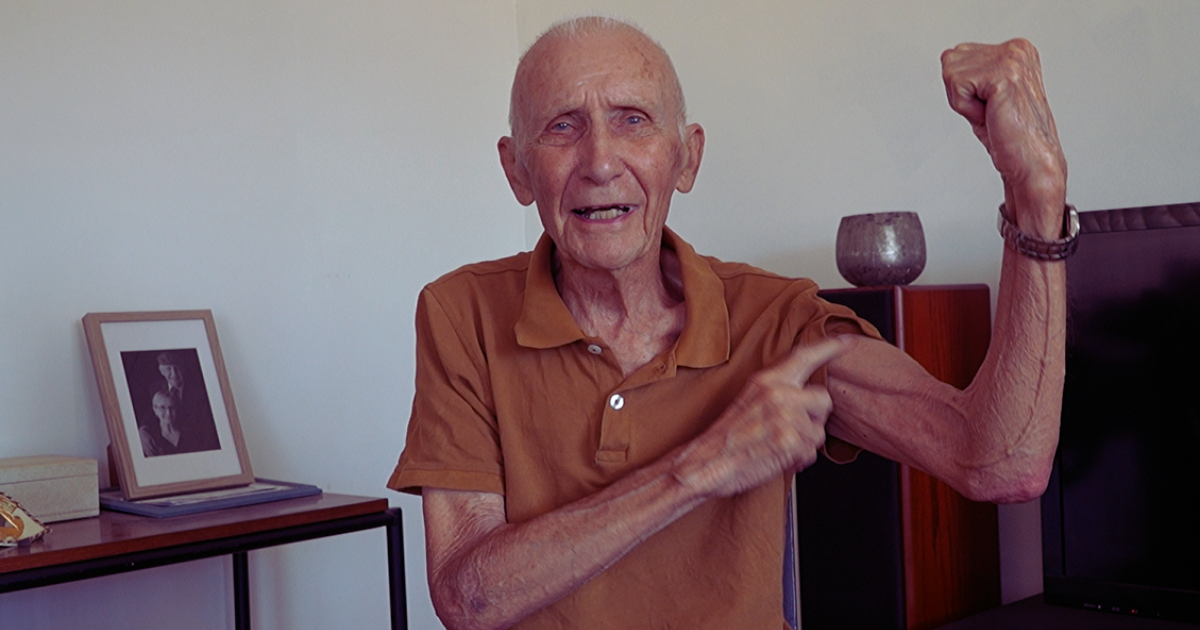
Ageing well is no longer seen as a matter of luck or genetics alone. Decades of global research now point to a powerful combination of mindset, physical activity and mental stimulation as key drivers of health and wellbeing in later life. At 90 years old, Brightwater Home Care client William is living proof of what the research tells us.
William’s life has not been an easy one. He left school at 15, was called into the army at 18, and sent to Egypt to help protect the Suez Canal. “Everything was just hard, and you had to get on with it. That’s just how life was,” he says. Independence and resilience were learned early - and they’ve stayed with him ever since.
“I have always been independent, and you need to look after yourself,” William says. This attitude is more than a personal philosophy - it’s supported by science.
Why mindset matters
Studies consistently show that a positive outlook can significantly influence health outcomes in older adults. Research from Yale University found that people with positive perceptions of ageing lived an average of 7.5 years longer than those with negative views, even after accounting for health and socioeconomic factors.
William understands this instinctively. “You have to be positive, otherwise you go under,” he says. Instead of seeing age as a limitation, he reframes it entirely. “A lot of people as they get older, they think ‘I’m old now’ — don’t think like that! Think positive all the time… You pick your age!”
For William, “90 means nothing.” What matters is how he approaches each day.
The role of physical movement
Alongside mindset, movement plays a critical role in healthy ageing. According to the World Health Organisation, regular physical activity can reduce the risk of falls, lower the risk of cardiovascular disease, and help maintain mobility and independence.
William keeps it simple — and consistent. “I do push-ups, go walking. I don’t sit about; I try to keep moving. I do my own exercises at home and walk. I keep on the move.”
His philosophy aligns closely with evidence showing that even moderate daily activity — such as walking — can significantly improve muscle strength, balance and overall quality of life in people over 65. “Keep on the go, otherwise you could fade away,” he says, echoing what researchers have been saying for years.
Keeping the mind fit
Mental stimulation is another critical piece of the wellbeing puzzle. Research published in The Lancet suggests that up to 40% of dementia cases worldwide could be delayed or prevented by addressing lifestyle factors such as physical inactivity, social isolation and lack of cognitive engagement.
William has always valued keeping his mind active. His enjoys reading and credits his mother with instilling the habit early. “I like reading. ‘You can go around the world in a book’, my mother would say, and she was quite right. It keeps my mind fit.”
Cognitive engagement — whether through reading, learning new skills or using technology — has been shown to support memory, slow cognitive decline and improve mood in later life.
Independence, support and purpose
While independence is important to William, he also recognises the value of support. With help from his family and Brightwater Home Care, he continues to live independently at home, staying active and engaged on his own terms.
Research shows that older adults who receive the right level of support are more likely to remain physically active, socially connected and mentally well, reinforcing the idea that independence and assistance are not opposites, but partners.
When asked what advice he’d give his younger self, William keeps it simple: “If you can help someone, help them.”
It’s a philosophy grounded in resilience, kindness and perspective - and one that reflects what the research makes clear: ageing well isn’t about avoiding age, but about staying positive, staying active, staying curious and staying connected.
Discover how we help senior West Australian's thrive in their own home.
With Brightwater at Home.
Discover More

