Living Well After a Brain Tumour Diagnosis: Dean’s Story
A brain tumour diagnosis can feel overwhelming. Dean’s story shows that life after diagnosis doesn’t have to be defined by fear or loss alone. With the right support, specialist rehabilitation and a stable environment, it is possible to rebuild independence, live purposefully and thrive.
Before his diagnosis, Dean was thriving at work and proud to be a devoted dad. Then a routine MRI revealed multiple brain tumours. He underwent eight major surgeries that saved his life, but left him with significant challenges, including severe motion sickness, disorientation and difficulty walking.
In 2022, after an extensive period of hospital rehabilitation, Dean began his next stage of recovery at Brightwater’s Oats Street, a specialised environment supporting people recovering from complex acquired brain injuries. He arrived fragile, exhausted and unsure of what his future might look like.
With support from a multidisciplinary Allied Health team and care staff, Dean began the slow process of relearning everyday skills and rebuilding routines. Progress came in small steps, but each step mattered.
Dean’s progress reflects what we see more broadly across Brightwater’s rehabilitation programs. Using internationally recognised outcome measures such as UKROC — which tracks changes in a person’s independence and care needs over time — we see many people make meaningful improvements in their physical, cognitive and social abilities during their time at Oats Street. These improvements support greater independence and can reduce the level of care needed over time.
For Dean, those improvements weren’t just outcomes, they changed his life.
“Oats Street saved my life… They gave me a new direction in life.”
Dean said.
At both Oats Street and in his new supported living environment at Kailis House, Dean found predictable routines that helped rebuild memory and confidence, a calm setting that reduced stress, and staff who understood the frustrations, fears and emotional toll of life after a brain injury.
Above all, he found a sense of community with people who believed in him, even on the days he struggled to believe in himself.
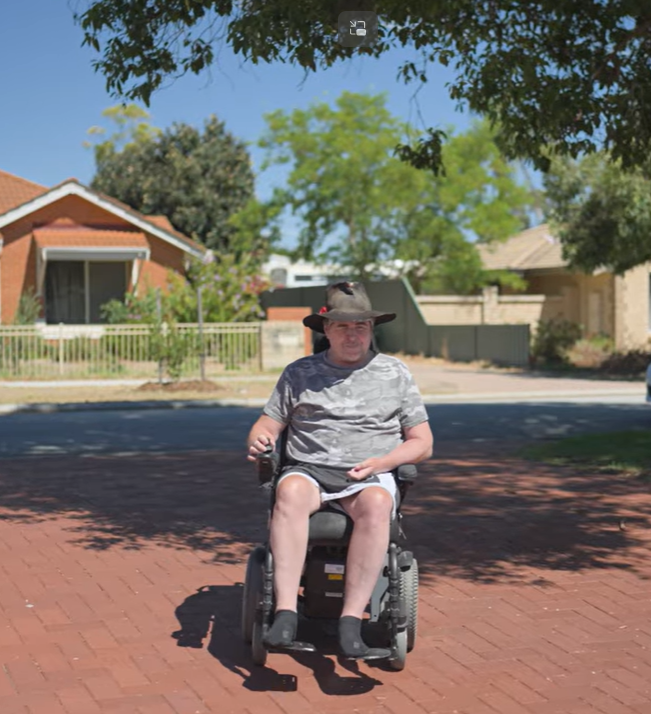
Today, Dean is doing more than just recovering. He stays mentally active, maintains strong connections with staff and community, and focuses on being present for his daughter. He continues to build independence in everyday life, guided by routines that support confidence, choice and stability.
“I thrive on adversity, just like all humankind does.”
Dean’s story is a reminder that with expert support and the right care, life after a brain tumour diagnosis can still include laughter, progress, purpose and hope.